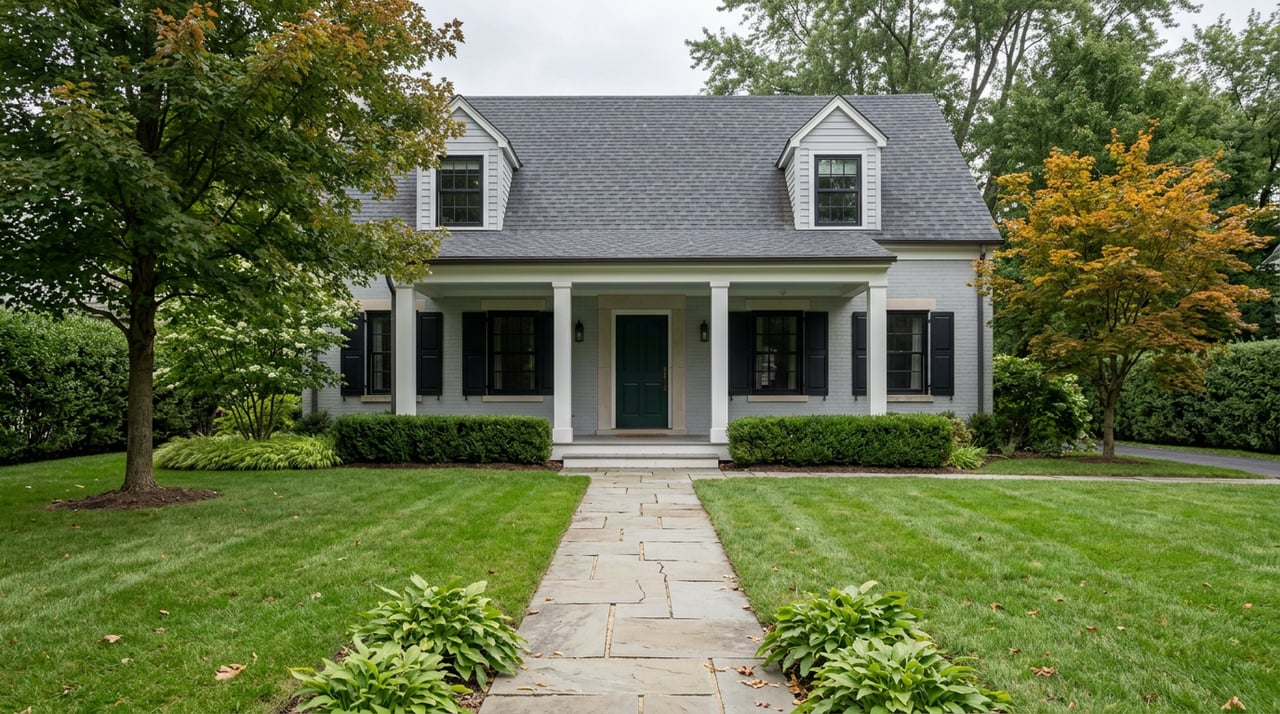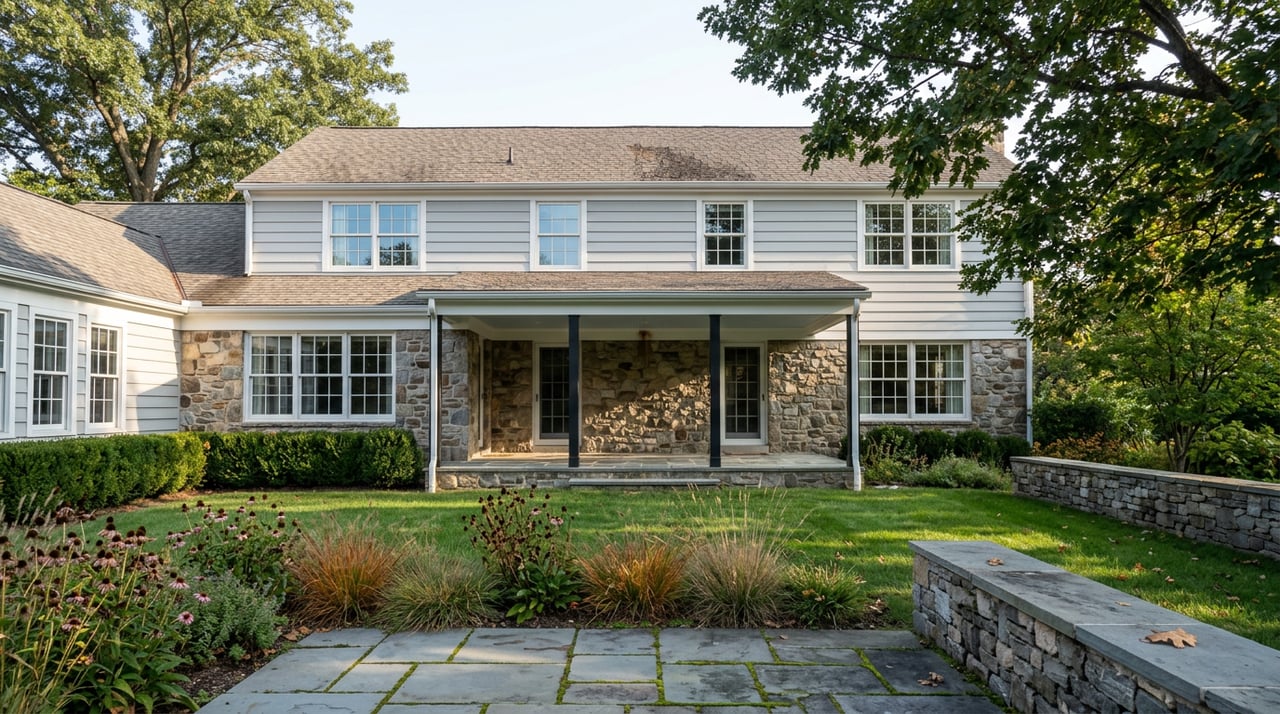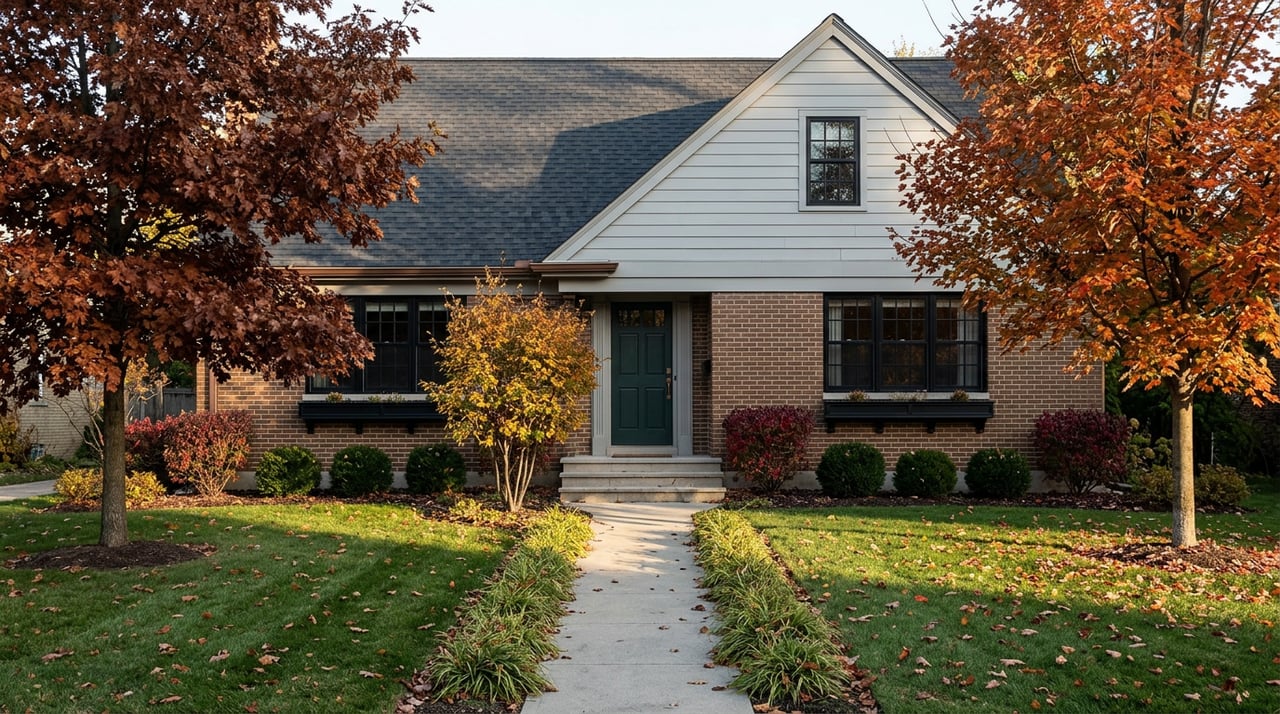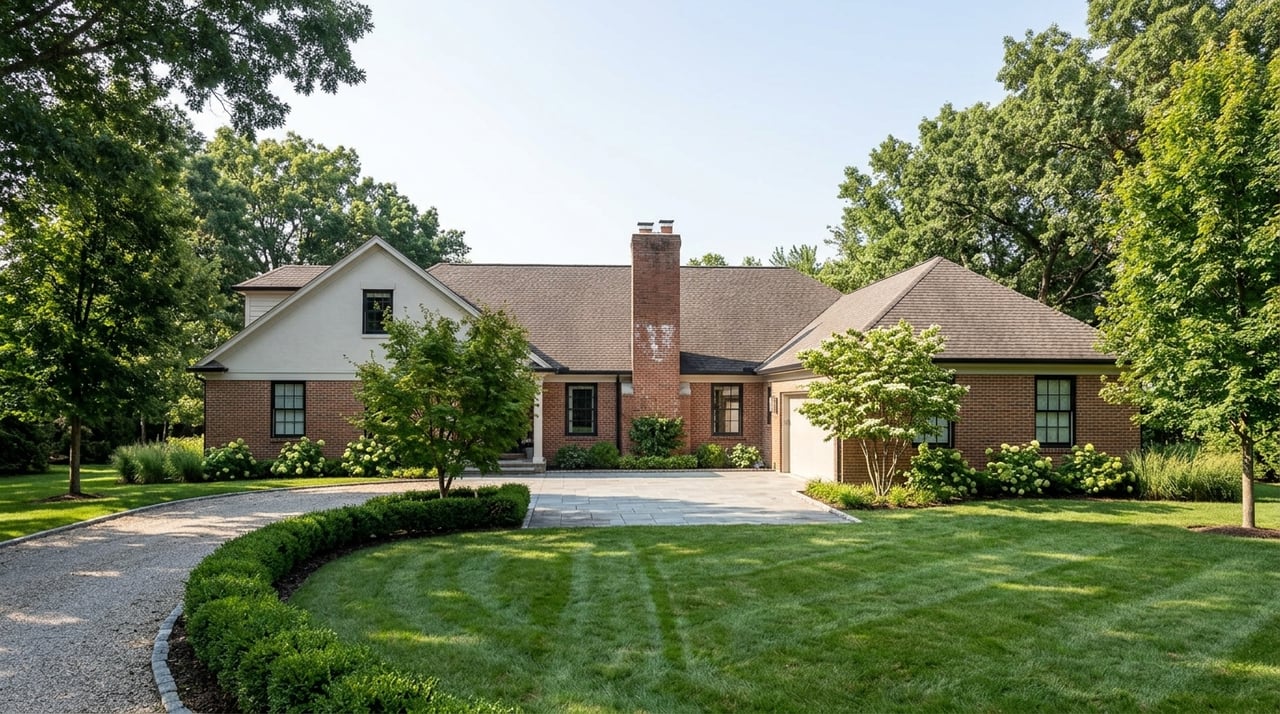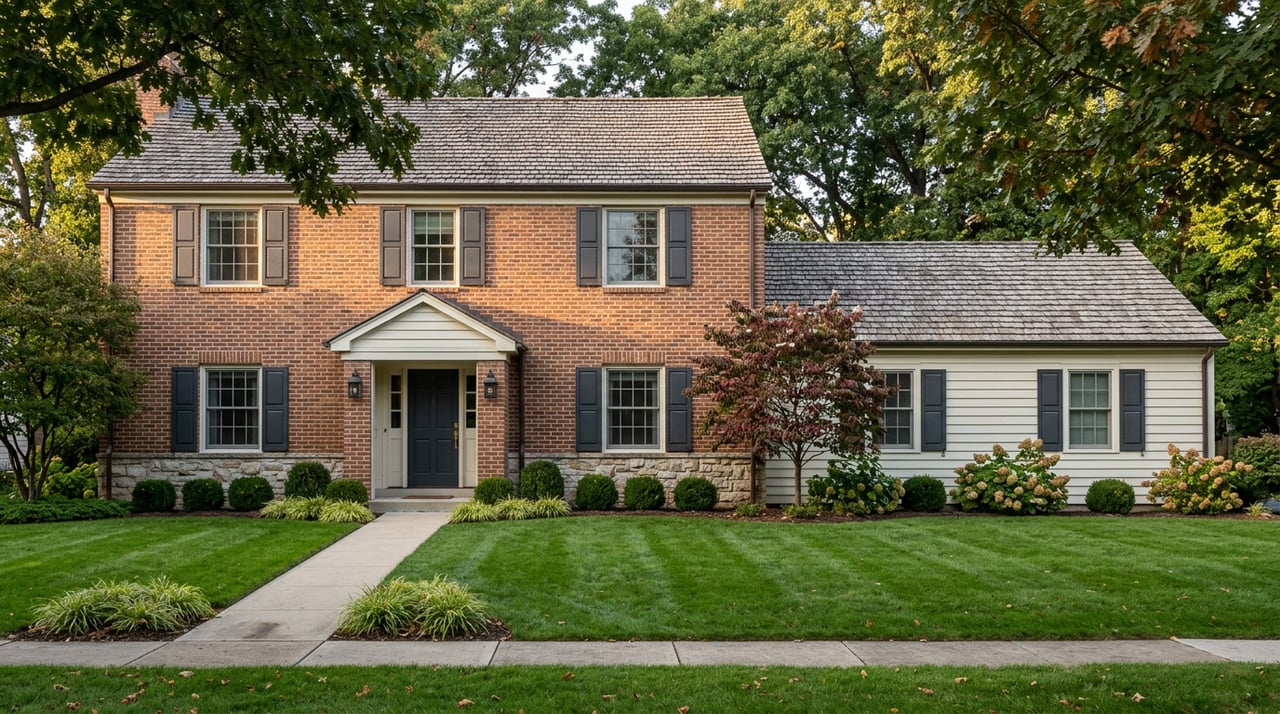
Grace and Mike Whalen weren't house hunting in 2018. They had a one-bedroom apartment in Chicago and a six-month-old baby, and Hinsdale wasn't part of the plan. Then a 90-year-old Colonial Revival at 24 E. Eighth St. came on the market, with shake siding, a Cape Cod feel, and bedrooms bigger than most houses its age offer. The plan changed.
What the Whalens assumed they were signing up for was the standard trade: character now, ceiling on expansion later. An old house on an old lot means fighting the same setback and floor-area rules as everyone else, with less room to maneuver than a freshly cleared teardown parcel down the block.
That assumption turned out to be backward. When architect Michael Abraham drew up plans for a two-story addition off the west side of the house, the village's historic preservation incentive program, paired with a zoning board variance, let the Whalens push the new sunroom further into the side yard than standard zoning would allow. They got the addition. They also stumbled onto a piece of Hinsdale code that most buyers and sellers never hear about until they're three steps into a project, according to The Hinsdalean's account of the renovation.
The assumption almost everyone starts with
Anyone evaluating an older Hinsdale property, especially one anywhere near the Robbins Park Historic District, tends to start from one premise: the older the house, the tighter the box. New construction gets built to the full zoning envelope. An existing house is stuck with whatever the last owner did, and expanding it under current rules costs more than starting fresh.
For a specific slice of Hinsdale's housing stock, that premise now runs the other direction. Since the village established its Historic Overlay District on September 20, 2022, homes on the Historically Significant Structures Property List can apply for alternative bulk zoning regulations that waive floor area ratio limits and height caps, reduce required setbacks, and increase allowable lot coverage, the same limits that would otherwise cap a from-scratch rebuild on the identical lot.
Trustee Alexis Braden, who also chairs the Hinsdale Historical Society, put it plainly in a Hinsdalean interview published in May 2026:
"We're going to allow you to build bigger on your lot than if you tore down. I think that that can be appealing, especially for younger families who need more space."
That's the trade most people never price in when they're deciding whether an old Hinsdale house is worth saving.
Two paths, priced side by side
| Standard teardown and rebuild | Preservation incentive route | |
|---|---|---|
| Zoning envelope | Standard FAR, height, setback, and lot coverage limits apply | FAR and height waived; reduced setbacks; increased lot coverage possible |
| Demolition or review fee | $11,100 within Robbins Park Historic District | No demolition fee; permit fee waiver available |
| Review body | Design review team, then Historic Preservation Commission Certificate of Appropriateness hearing; advisory Village Board vote if denied | Historic Preservation Commission approves fee waivers and zoning items directly |
| Timeline | Can stretch past a single hearing cycle if a design is contested | About three months from application to list eligibility |
| Financial upside | None built in | Property tax rebate (minimum $50,000 eligible investment, up to five years, transferable to a future owner) plus a 50% matching grant up to $10,000 |
The $11,100 demolition fee inside Robbins Park isn't incidental. The village raised it from $7,928 in 2024 specifically to cover the added staff and consultant time that a formal review now requires.
If you're selling an older house
Robbins Park itself is bordered by Garfield Street on the west, County Line Road on the east, Eighth Street on the south, and the railroad tracks on the north, a footprint of roughly 475 homes, but the incentive program isn't limited to that district. Eligibility runs on six criteria tied to architecture or local history, and the list already covers everything from small brick bungalows to Robbins Park's largest Queen Annes.
Village planner Bethany Salmon has one piece of advice that matters more than the paperwork itself: talk to the village before you list, not after an offer arrives.
- Contact the village planner directly (630-789-7035) to ask whether your home meets one of the six qualifying criteria
- Expect roughly three months from application to a spot on the Historically Significant Structures Property List
- If your home qualifies while it's on the market, that's not a problem. Salmon has said some of the program's best outcomes happen when homes get added to the list while they're actively being marketed for sale
- Once listed, the zoning upside becomes a selling point you can put in front of buyers directly: an addition a straight teardown couldn't legally match
As of May 2026, 102 homes had joined the list in just over three years, and the village board has approved roughly $246,000 in fee waivers, $160,000 in matching grants, and $137,000 in property tax rebates tied to more than $12 million in reinvested construction. That's not a niche program. It's become a standard step in how a meaningful share of older Hinsdale homes get marketed.
If you're buying a teardown lot
If your plan is to buy an older house strictly for the land, the friction shows up whether or not the house is on anyone's significant list, and it's sharper inside Robbins Park specifically. Before a demolition permit gets issued there, current rules require a preliminary meeting with a design review team, then a formal Certificate of Appropriateness application to the Historic Preservation Commission. If the commission denies the application, the case moves to the Village Board within 60 days, though that vote is advisory only.
Recent cases show the commission still tends to approve demolition once a project is formally presented, even over its own members' objections. In April 2026, commissioners voted 5-0 to approve certificates for both the demolition of a 115-year-old Colonial Revival at 305 S. Garfield St. and construction of its modern replacement, despite commission chair John Bohnen raising concern that the pattern could eventually cost the district its place on the National Register of Historic Places.
The scale of what's already been lost gives that concern some weight. A commission member estimates that Hinsdale has lost roughly half of its original housing stock to teardowns since the 1990s, with annual demolitions once topping 100 a year village-wide. The village issued 26 teardown permits in 2023, the year the incentive program launched, though staff caution it's too early to credit the program alone for any slowdown.
For a buyer, the practical read is straightforward. A teardown lot inside Robbins Park comes with a real fee, a real hearing calendar, and no guarantee the commission's design preferences carry weight, since the Village Board's authority is advisory. Older lots outside the historic district skip the Certificate of Appropriateness step and move on a standard building-permit timeline instead, which is worth confirming before you assume any older Hinsdale lot carries the same friction.
The math that actually matters
The historic label used to signal a headache: more paperwork, less flexibility, slower closings. For a house that qualifies for Hinsdale's overlay program, it now signals the opposite. A homeowner willing to work within the preservation framework can add square footage a demolition permit legally cannot buy back on the same lot. Pricing a sale, or budgeting a teardown, without accounting for that is guessing.
FAQ
Does the incentive program only apply to homes in the Robbins Park Historic District? No. The Historic Overlay District draws from village-wide eligibility criteria tied to architecture or historical association, not neighborhood boundaries. Small bungalows outside Robbins Park have qualified alongside the district's largest homes.
Does a property tax rebate transfer if the house sells? The rebate is structured to transfer to a new owner, but the approved alterations must be maintained for five years. The village can require repayment of incentive funds if a later owner reverses the work.
Does landmark or overlay status make a house harder to sell? Village staff report a shift in how these listings get marketed. Homes approved for the historic overlay are increasingly described as full of potential rather than as teardown candidates, a change from how the same properties were framed even a few years ago.
If you're weighing whether to renovate, add on, or sell an older Hinsdale house, or you're eyeing a lot with a teardown in mind, the zoning math above is exactly the kind of detail that changes a pricing conversation. Timothy Soltys works these decisions with Hinsdale clients directly. Reach out for a market analysis and a clear read on what your specific property, and its lot, can actually support.