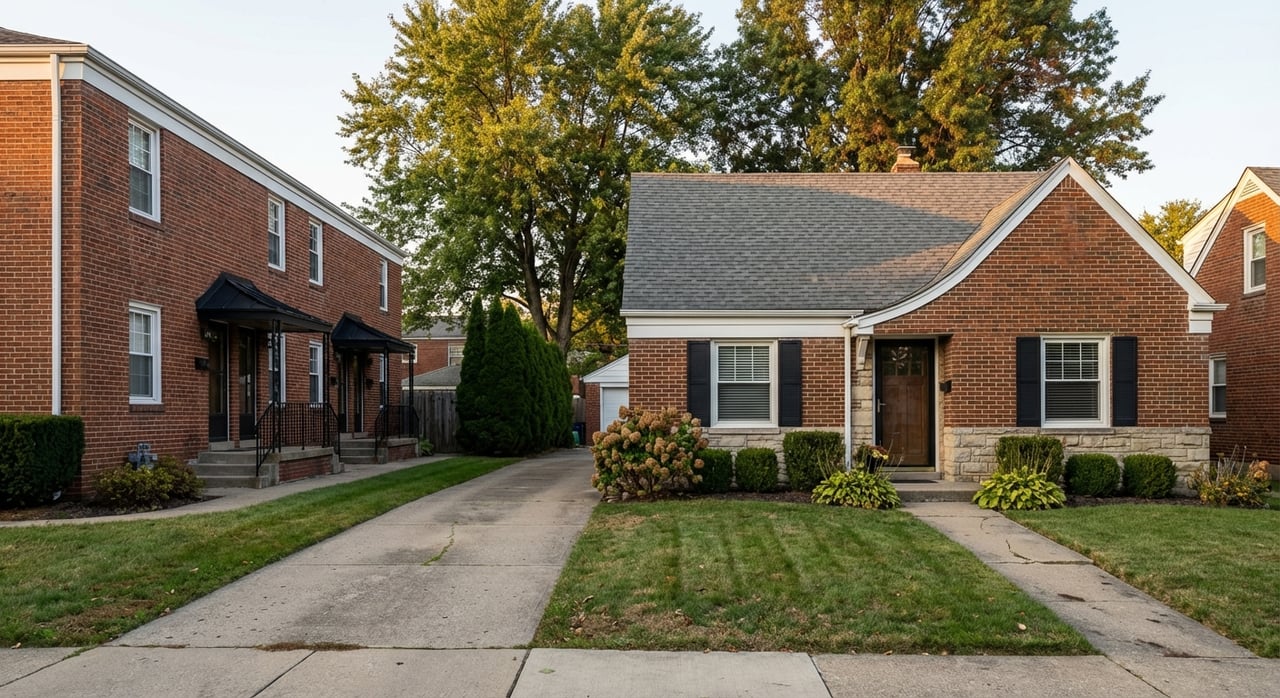
Looking for a rental or investment property where demand stays steady and the math is clear? Bensenville sits next to one of the Midwest’s largest job engines and offers a housing mix that works for small and mid-size investors. You might be weighing single-family, a duplex, or a small apartment building and wondering what actually cash flows. In this guide, you’ll see local rent and price signals, simple return math, compliance steps, and on-the-ground tips to help you move with confidence. Let’s dive in.
Why Bensenville works for rentals
Jobs and access power demand
Bensenville borders O’Hare International Airport, a 24/7 employer and logistics hub. That means a wide base of renters tied to airline, cargo, and warehouse operations. The village also has a local Metra station on the MD‑W line, which keeps commuters connected across the region. You can point to O’Hare’s ongoing development as a long-term demand driver, as explained by the airport’s planning site at ORD21, and to the Bensenville Metra station for reliable access.
Mid-market prices and rents
At the time of writing, Bensenville’s median home value sits around the low-to-mid $300Ks (Zillow ZHVI, Jan 2026). Average advertised apartment rents tend to cluster in the $1,700 to $1,800 range, with many 2-bedroom units around $1,850 to $1,960, according to RentCafe’s Bensenville snapshot. Prices and rents move seasonally, so use a live check when you underwrite a deal.
Housing mix that fits small investors
Bensenville is roughly half renter and half owner occupied in recent ACS data, with a healthy mix of single-family homes and small multifamily buildings. That split supports several entry paths: buy-and-hold SFRs, a house-hack in a two-flat, or a small walk-up that spreads costs across more doors. Regional multifamily research also shows the Chicago area operating with high occupancy in recent quarters, which supports stability in many suburbs near O’Hare, per Northmarq’s Midwest report.
What to buy: common property types
Single-family rentals: pros and cautions
Single-family homes are an easy financing and management starting point. They attract broad tenant interest, and exits are flexible because you can sell into the owner-occupant market. The caution in DuPage is property taxes and operating costs, which can compress cash flow if you buy near the median price. Your underwriting must be tight on taxes, insurance, and reserves.
Small multifamily: scale and stability
Two- to six-unit buildings often deliver better per-door economics because shared systems reduce cost per unit. You also lower vacancy risk when one unit turns. In the Chicago suburbs, small multifamily has seen active investor interest in recent quarters, a sign that buyers are leaning into scale when single-family returns feel thin. If you want positive cash flow with today’s rates, this is often where you find it.
Condos and townhomes: read the rules
Entry prices can be lower, and exterior maintenance is lighter. Factor HOA dues, special assessments, and leasing restrictions into your pro forma. Confirm whether the HOA limits the number of rentals, the minimum lease term, and any additional fees for landlords.
Micro-location tips inside Bensenville
- Areas near the Metra station and along major routes like Route 83 and Irving Park often see strong renter interest due to commute convenience.
- Blocks that border O’Hare-linked industrial parks can benefit from logistics and airport employment bases.
- Watch for parcels near active industrial redevelopment. Confirm zoning and any planned land-use changes before you buy.
The numbers that drive returns
Quick formulas that matter
- Gross annual rent = monthly rent × 12.
- Effective gross income (EGI) = gross rent − vacancy allowance.
- Net operating income (NOI) = EGI − operating expenses. NOI excludes mortgage payments.
- Cap rate = NOI ÷ purchase price.
- Cash-on-cash return = annual pre-tax cash flow ÷ total cash invested.
Common planning inputs in this area:
- Vacancy in stable suburbs: 4% to 7%.
- Property management: often 8% to 12% of collected rent for single-family and small portfolios, per LeaseRunner’s fee guide.
- Maintenance and reserves: 1% of property value per year is a common heuristic.
- DuPage property taxes: plan with an effective rate around the low 2% range. See DuPage County effective rate context and always verify the parcel’s actual bill.
- Typical financing check: use the current 30-year fixed average from the Freddie Mac PMMS when you model.
Baseline market snapshot to use
- Median home value: about $331,540 (Zillow ZHVI, Jan 2026).
- Average apartment rent: $1,700–$1,800; many 2-bedrooms $1,850–$1,960, per RentCafe’s Bensenville trend page.
- Regional occupancy context: stabilized apartments in the Chicago area have run at high occupancy in recent quarters, per Northmarq’s Midwest analysis.
Worked example: median-priced SFR
This is a conservative illustration to set expectations. Replace these with property-specific numbers before you write an offer.
- Price: $331,540 (reference point: Zillow ZHVI, Jan 2026).
- Rent: $1,958 per month for a 2-bed average in recent data.
- Vacancy: 5%.
- Taxes: 2.31% effective rate for DuPage planning purposes.
- Insurance: $1,800 per year (illustrative; get quotes).
- Management: 10% of collected rent.
- Maintenance reserve: 1% of value.
- CapEx reserve: 5% of collected rent.
- Financing: 25% down, 30-year fixed at about 6.09% from the Freddie Mac PMMS.
Results, rounded:
- Annual gross rent: $1,958 × 12 = $23,496.
- EGI after 5% vacancy: ≈ $22,321.
- Operating expenses: ≈ $16,122 (taxes ≈ $7,659; insurance ≈ $1,800; management ≈ $2,232; maintenance ≈ $3,315; CapEx ≈ $1,116).
- NOI: ≈ $6,199. Cap rate: ≈ 1.9%.
- Annual debt service: ≈ $18,063.
- Pre-tax cash flow: ≈ −$11,864.
Takeaway: At median pricing, a typical SFR may run negative with today’s rates and DuPage taxes. You improve results by buying below market, increasing bedrooms, adding an accessory unit, or shifting to small multifamily.
Worked example: small multifamily value
Now, see how scale helps. Assume a well-kept 3‑unit near transit.
- Price: $525,000.
- Rents: three 2‑bed units at $1,900 each = $5,700 per month (fits current 2‑bed trends).
- Vacancy: 5%.
- Taxes: 2.31% effective rate.
- Insurance: $2,400 per year (illustrative).
- Management: 8% of collected rent.
- Maintenance reserve: 1% of value.
- CapEx reserve: 5% of collected rent.
- Financing: 25% down, 30-year fixed at about 6.09% from the Freddie Mac PMMS.
Results, rounded:
- Annual gross rent: $5,700 × 12 = $68,400.
- EGI after 5% vacancy: ≈ $64,980.
- Operating expenses: taxes ≈ $12,128; insurance ≈ $2,400; management ≈ $5,198; maintenance ≈ $5,250; CapEx ≈ $3,249. Total ≈ $28,225.
- NOI: ≈ $36,755. Cap rate: ≈ 7.0%.
- Annual debt service on 75% LTV: ≈ $28,300.
- Pre-tax cash flow: ≈ $8,455.
Takeaway: With more doors, the per-unit math improves. Even with conservative taxes and vacancy, you can create positive cash flow if you buy right and keep expenses in line.
Compliance you must plan for
Rental registration and inspections
Bensenville requires rental registration and periodic inspections for residential rentals. Owners must register each unit and schedule inspections under the village program. Start with the ordinance language in the Bensenville municipal code and use the village’s Inspectional Services page to confirm timelines, fees, and required forms. Budget time for any repairs that come out of inspections and plan for annual renewals.
Taxes and parcel-level checks
Bensenville spans DuPage and a small portion of Cook County. Effective property-tax rates in DuPage often land a bit above 2% of market value, which is a major return driver. Use county records to pull the exact parcel tax and confirm any pending reassessments. For planning context, review DuPage effective rates by ZIP, then underwrite with the actual bill.
Landlord-tenant rules and timing
Illinois law sets standards for deposits, notices, repairs, and more. If you are new to the state, read the relevant sections of the 765 ILCS statutes in the Illinois compiled laws and talk with a local attorney or property manager for practical guidance. Build compliant move-in packets, deposit handling, and notice timelines into your process before you market a unit.
Property management: when it pays off
Full-service management can be the difference between a part-time job and a hands-off investment. Typical scope includes marketing and leasing, tenant screening, rent collection, maintenance coordination, 24/7 emergency calls, periodic inspections, help with village registration and annual inspections, and monthly/annual accounting. Fee structures often include an ongoing management fee around 8% to 12% of collected rent, a one-time leasing fee of 50% to 100% of one month’s rent, and small setup or inspection fees, as summarized in LeaseRunner’s cost guide. In Bensenville, a manager who knows the local inspection program can help you avoid failed inspections and delays.
Where to start: a simple plan
Define your buy box. Pick your budget, property type, bedroom count, and target rent. Use live rent data and current mortgage rates to set realistic returns.
Underwrite three deals deeply. Pull exact tax bills, estimate insurance, and plug in a vacancy allowance. Model both self-managed and third-party management scenarios.
Walk the micro-locations. Visit during commute hours. Note street parking, noise, and travel time to the Metra station or major routes.
Pre-screen compliance. Confirm zoning, rental registration steps, and any open code items with the village’s Inspectional Services.
Line up operations. Get two to three quotes from property managers and key vendors. Decide who handles leasing, showings, and 24/7 maintenance.
Write realistic offers. Price in inspection items, appliance updates, and reserves. Ask for seller credits if taxes are due to jump.
Local signals to watch
- O’Hare development updates. Airport and cargo expansions tend to boost nearby housing demand. The airport’s planning hub at ORD21 is a helpful reference.
- Regional occupancy and absorption. High occupancy supports stable rents, as seen in recent Midwest reporting.
- Mortgage-rate trend. Cash-on-cash returns shift quickly with rates. Check the Freddie Mac PMMS as you evaluate offers.
Bottom line for Bensenville investors
Bensenville gives you strong transportation access, proximity to a major job base, and a housing mix that works for smaller portfolios. At median prices, single-family rentals may run thin on cash flow with today’s rates and DuPage taxes. When you add more units, buy below median, or improve a property to meet higher rent brackets, the numbers often turn. Your best results come from tight underwriting, parcel-level tax checks, and a plan for the village inspection program.
If you want a quick read on a specific property, or you’re ready to shop for a duplex or small apartment near transit, reach out. I can run the numbers, flag compliance steps, and line up management so your cash flow plan is realistic. Start with a short consult and a few listings that fit your buy box. When you are ready, connect with Timothy Soltys for next steps.
FAQs
What makes Bensenville attractive for rental investing?
- Proximity to O’Hare, strong highway/rail access, and a local Metra station support steady renter demand across shift workers and commuters.
What are typical Bensenville rents and home prices?
- Average rents often run $1,700–$1,800, with many 2-bed units around $1,850–$1,960, while median home value trends in the low-to-mid $300Ks.
Do I need to register my rental in Bensenville?
- Yes, the village requires rental registration and periodic inspections; review the municipal code and contact Inspectional Services for timelines and fees.
How do DuPage property taxes affect my cash flow?
- Effective rates around the low 2% range can be a large expense line, so always underwrite using the actual parcel tax bill before you offer.
Is small multifamily usually better than single-family here?
- Often yes for cash flow, because multiple rents share expenses and lower vacancy risk; run both scenarios with current rates and taxes.
Do I need a property manager to invest in Bensenville?
- Not required, but a local manager can streamline leasing, inspections, compliance, and 24/7 maintenance, which protects cash flow and time.