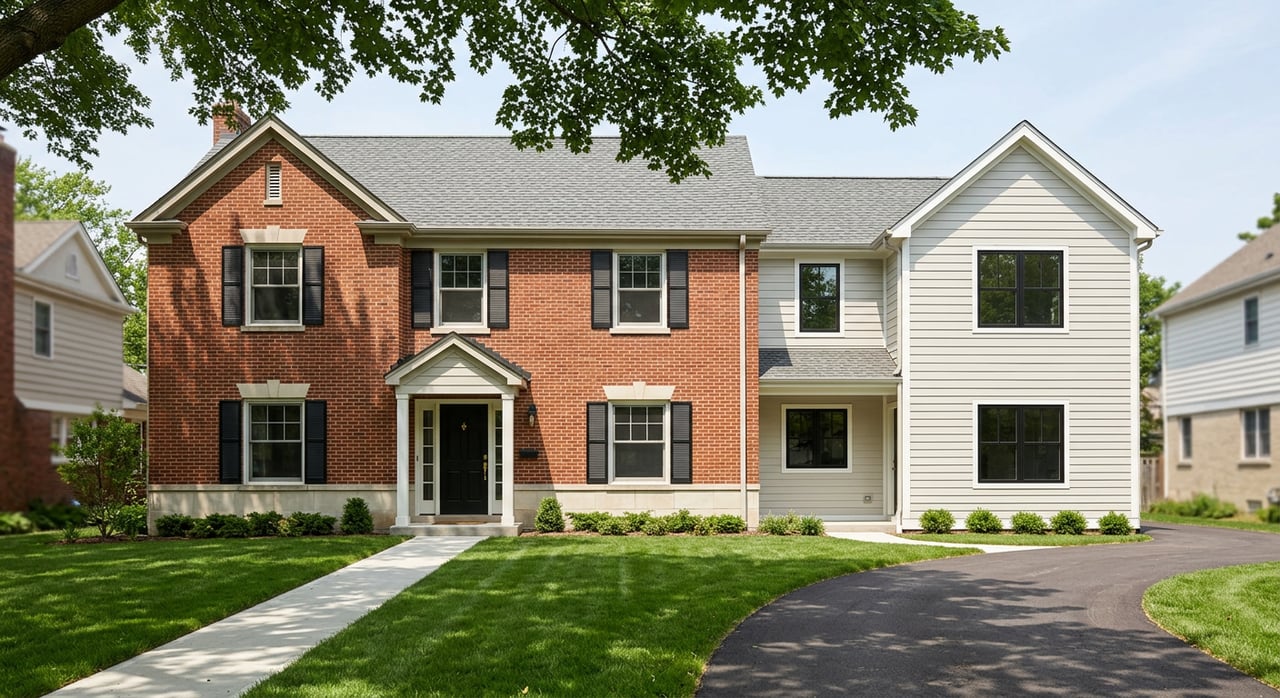
Outgrowing your Elmhurst home and wondering if you should open up walls, build up, or buy bigger? You’re not alone. In a market where buyers value function, space, and lot features, the right move can protect your equity and your sanity. In this guide, you’ll get Elmhurst‑specific facts on costs, zoning, timelines, taxes, and resale impact so you can choose with confidence. Let’s dive in.
Elmhurst market facts that shape your choice
Elmhurst sits in a higher price tier for the suburbs, with typical values around the mid‑$500s and recent sale medians reported in the $600s. That price tier matters because buyers in this range tend to prioritize floor plan function, bedroom and bathroom count, and updated kitchens and baths. Neutral updates that improve daily living often outperform flashy, purely cosmetic changes.
School district reputation and lot features also play into buyer decisions. Elmhurst CUSD 205 is a common reference point for shoppers comparing communities across the near‑west suburbs. Review the district’s information directly through the district’s site if schools are part of your criteria.
Why price tier matters for resale
In a market where many buyers are move‑up families, missing a bedroom or a second full bath can cap your price more than dated finishes. Adding usable space or correcting key layout gaps can lift your sale price, even if percentage recapture is lower than a small refresh. The neighborhood’s price ceiling still applies, so compare to nearby sold homes before you over‑improve.
Property taxes to factor in
DuPage County uses multiple taxing bodies to calculate your bill, and effective burden ties back to assessed value and exemptions. Review the county’s Property Tax Rate Booklet to see how local rates stack up and which districts apply to your location. City levies can shift year to year, so keep an eye on recent council actions when modeling carrying costs.
- DuPage County Property Tax Rate Booklet: 2024 county tables
- City levy context: Elmhurst council’s 2025 tax levy approval
What your lot and rules allow
Start with a feasibility check
Before you sketch plans, confirm what the city will allow on your lot. Pull your current plat of survey, then call the City of Elmhurst Building Department for permit steps and submittal requirements. This quick call can save weeks and help you plan for inspections, staging, and work‑hour limits.
- City resources: Elmhurst Building Department
Zoning constraints that affect additions
Elmhurst controls front, side, and rear setbacks, maximum lot coverage, and building height. Many older lots are “nonconforming” under newer standards, which can tighten where and how you add on. The city’s zoning rewrite materials also discuss block‑average setbacks and accessory standards that affect bump‑outs, second stories, and ADUs. Confirm your district, review setbacks, and ask whether a variance could be required before you pay for design.
- Zoning context: Elmhurst zoning rewrite technical report
Trees, stormwater, and any historic review
Elmhurst enforces erosion control, parkway tree protections, and stormwater measures on larger projects. If a property is locally designated for historic review, additional design steps may apply. The Building Department can outline which forms and inspections you should expect.
- Permitting and inspections: Elmhurst Building Department
Cost, timeline, and disruption in Elmhurst
Remodel: targeted updates with strong ROI
In the East North Central region, a midrange minor kitchen remodel typically runs about 27,000 to 28,000 dollars and has shown high resale recapture, even above 100 percent in recent reporting. Midrange bath projects also tend to perform well, but results vary by scope. Small, functional updates punch above their weight with buyers here.
- Regional ROI benchmarks: Remodeling Cost vs. Value 2025
Typical timeline: weeks to 2–3 months. Many homeowners can remain in place with limited disruption if the work is sequenced well.
Add on: bump‑outs, bedrooms, or a second story
Chicago‑area additions average about 66,700 dollars, with many projects ranging from roughly 29,000 to 106,000 dollars, depending on size and complexity. A practical planning guide for Illinois puts many additions at 150 to 300 dollars per square foot, with complex second stories or tight sites climbing higher. Always include a 15 to 20 percent contingency for unknowns like foundation surprises or utility moves.
- Cost ranges: Chicago addition costs
- Illinois per‑square‑foot guidance: RenoCanvas cost guide
Typical timeline: 3–6 months for simpler bump‑outs or finished basements. Second stories or structural work can stretch to 6–12 months or more. Permitting can add weeks or months before a shovel hits the ground.
Tear down and build new
Custom new construction in Chicagoland often runs 250 to 650 dollars per square foot depending on finishes and site conditions, with demo, land value, and utility work on top. For a 2,500 square foot custom home, the structure alone can exceed 625,000 dollars before soft costs and land. New builds typically take 12 to 24 months from design to move‑in.
- New‑build context: Chicago new construction budget ranges
How each option affects resale
Smaller, high‑impact updates often deliver the highest percentage recapture, especially minor kitchen work and certain exterior projects.
Additions tend to recoup a lower percentage per square foot but can still raise your absolute sale price if you add the bedrooms, baths, or living space buyers want.
New construction can command a premium if aligned with local comps, but watch the neighborhood price ceiling. Over‑finishing beyond nearby newer homes is a common way owners miss on recapture.
ROI reference: Remodeling Cost vs. Value 2025
Financing and tax impacts
Renovation loans that bundle costs
If you plan to buy and improve with a single mortgage, look at the Fannie Mae HomeStyle Renovation loan. It allows purchase or refinance plus renovation funds tied to the as‑completed appraised value. FHA’s 203(k) program is another path, with a Limited option for smaller non‑structural projects and a Standard option for larger, structural work.
- Learn more: Fannie Mae HomeStyle Renovation
- Program basics: HUD FHA 203(k) consumer fact sheet
Using your equity or construction financing
Many Elmhurst owners use a HELOC, home equity loan, or a cash‑out refinance to fund remodels. For ground‑up projects, construction loans are common and can be single‑close or two‑close structures. Compare rates, draw schedules, and fees, then stress‑test the payment against a longer timeline.
Expect a reassessment after big work
In DuPage County, significant improvements are reported to the assessor and can trigger a reassessment. Budget for a higher tax bill after completion, based on the new as‑improved value. The county booklet helps you understand which taxing bodies drive your total bill.
- County reference: DuPage Property Tax Rate Booklet
Move or improve: a simple decision path
Use this quick framework to decide if you should remodel, add on, or move.
- Clarify your time horizon.
- If you plan to sell within 2 years, favor high‑recapture updates that make the home show better: minor kitchen refresh, bath updates, paint, curb appeal. Regional Cost vs. Value data supports these choices.
- If you plan to stay 5 years or more, larger additions or comfort upgrades may make sense, even if recapture is below 100 percent.
- Confirm what your lot allows.
- Pull your plat of survey and check setbacks, lot coverage, and easements. If your lot is nonconforming, a variance may be needed, which adds time and uncertainty.
- Start with the city’s resources: Elmhurst Building Department and the zoning rewrite technical report.
- Check the neighborhood price ceiling.
- Compare price per square foot and bedroom/bath counts for recent nearby sales. This anchors a realistic resale target so you do not overbuild for the block.
- Model total project cost and cash.
- Price the work, include a 15 to 20 percent contingency, and add financing costs. If you are buying up, include down payment, closing costs, moving, and potential overlap housing.
- Run a contractor and permit feasibility step.
- Speak with an Elmhurst‑experienced architect or design‑builder for a first‑pass scope, structural implications, and a permit timeline. The city can confirm submittal packets and inspections.
- Compare net sale proceeds to build cost.
- Estimate your net sale proceeds after agent fees and seller costs, then compare that to your all‑in addition or new‑build cost plus higher taxes and carrying costs. If the cost to reach your target space is close to or higher than the move‑up gap, buying bigger can be the cleaner path. If the gap is wide and your lot allows a simple addition, adding on may win.
Quick ROI wish list for short‑horizon sellers
If you are likely selling soon, focus here first:
- Minor kitchen refresh (midrange) around 27,000 to 28,000 dollars has shown strong regional recapture.
- Midrange bath updates, fresh paint, lighting, and hardware.
- High‑impact exterior upgrades like new entry or garage doors and siding repairs.
Use the latest regional data to fine‑tune priorities: Remodeling Cost vs. Value 2025
Timeline planning: living through the work
- Small cosmetic jobs: plan on weeks to 2–3 months. You can often stay in the home.
- Typical additions: expect 3–6 months. Second stories or major structural changes can run 6–12 months or more.
- Tear down and build new: plan for 12–24 months from design through final inspections. Build in buffer time for permitting, weather, and materials.
Get local numbers that fit your block
Every smart move‑up decision in Elmhurst comes down to three local truths: what your lot allows, the neighborhood price ceiling, and how long you plan to stay. If you want a quick, no‑pressure run‑through of your options, plus comps and a clear next step, reach out to Timothy Soltys for a short consult. You will get straight answers on remodel vs. add‑on vs. move, and a plan that matches your budget and timeline.
FAQs
What adds the most resale value in Elmhurst before selling?
- Regional data shows minor kitchen refreshes and select exterior updates often have the highest percentage recapture, while full additions raise price but recoup a lower percent per square foot.
How do Elmhurst zoning rules affect a second story?
- Height, setbacks, and lot coverage control what you can build, and many older lots are nonconforming, so a variance may be needed; review the zoning rewrite materials and call the Building Department early.
How much does an Elmhurst home addition cost in 2026?
- Many projects fall in the 150 to 300 dollars per square foot range, with Chicago‑area averages near 66,700 dollars, but complex second stories can cost more, so include a 15 to 20 percent contingency.
Will my DuPage County property taxes go up after a remodel?
- Significant improvements are reported to the assessor and can trigger a reassessment, so budget for a higher bill tied to the new as‑improved value.
How long do Elmhurst permits and additions usually take?
- Permitting can add weeks to months up front, then most additions take 3–6 months; second stories or structural work can extend to 6–12 months or more.
Which loans let me buy and renovate with one mortgage?
- Fannie Mae’s HomeStyle Renovation and FHA’s 203(k) programs combine purchase or refinance with renovation funds, subject to program rules and documentation.